Two simple practices can help higher ed leaders spot emerging threats, test their readiness, and act before problems become crises.
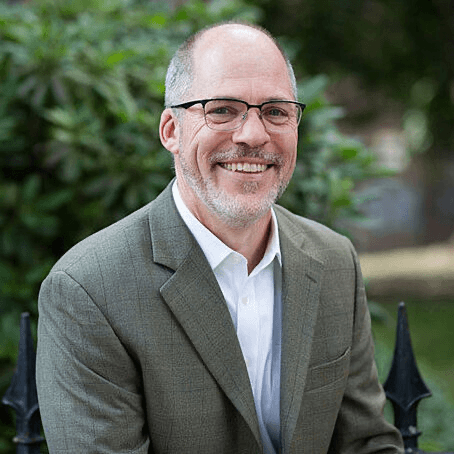
Pete Mackey, Ph.D.
President & Executive Strategist

Most colleges and universities plan well for physical risks. They know how to respond if a flood knocks out basement utilities and a residence hall loses power in January, if a fire damages a classroom building, or if a storm hits campus. Facilities teams are trained, scenarios are mapped out, and plans are tested. This work is important, and most schools handle the operational side well.
After more than 30 years in higher education, what still surprises me is how few institutions, including some of the best-known, apply the same discipline to the risks that cause another kind of severe damage. The results of this kind of passivity ultimately undermine trust and morale, yes, but also enrollment, alumni giving, and finances. I have watched careers end and institutions absorb years of financial harm because no one sat down beforehand to plan for those risks with the seriousness given to the boiler room.
My argument in brief is that institutional risks fall into two categories: physical and conditional. Most institutions prepare, at least on paper, for the physical ones. They tend to move fast. The conditional ones tend to move slower. But they can be like a rising storm, and leaders too often watch them build without acting.
Physical risk and the information vacuum
Physical risks usually arrive without warning: a fire, a report of an armed person on campus, or a sudden incident that puts people in danger. Police, firefighters, and medics handle the threat and are typically well trained for it.
Perhaps because the damage from a natural or human-made disaster can be so shocking, by now most institutions have operational plans designed to meet such physical risks with full-scale responses from campus and community partners.
The leadership team has an important role in those situations. People need to be assured right away that someone is in charge, that the school understands what’s happening, and that it’s taking action. This means being open about what you know, even if the information isn’t complete, and acknowledging that you’re still working on it. If leaders wait too long, fear and rumors take over. Then, besides other problems, the community’s speed of recovery and the school’s reputation suffer.
Conditional risk and the leaking air
Most risks in higher education, however, unfold far more slowly, as conditions change. Enrollment erodes year by year, or a funding stream shrinks. A legislature or a federal agency weakens the research capacity or budget. Political scrutiny builds. An error within the institution grows, over weeks, through inadequate responses, defensiveness, or stiff-arming into a reputational problem.
These risks give leadership something that fast-moving risks don’t: time to act. Often, there are days, weeks, or even months to understand the emerging threat and decide how to respond. But too often, schools see the situation change, know the problems are growing, hope the causal force will shift, and act when it’s too late.
I worked with a well-resourced college that understood the better calculus. Leadership anticipated political scrutiny the week after the 2024 election and began preparing immediately, bringing in communications and political counsel. It spent months preparing for the anticipated scrutiny, and when it arrived, the institution was ready to manage the controversy legally and reputationally.
Most schools can’t afford to spend what it took to address that situation. But budget wasn’t the difference-maker. What mattered was that the president made readiness a priority from the outset.
Why institutions aren't prepared
In my experience, institutions aren’t as ready for these risks as they imagine because of two habits.
The first habit undermines preparedness for physical risks. Institutions often spend weeks drafting the exact wording they would use in a crisis that might happen. They debate the statement they would issue if a fire broke out someday, without knowing where it occurred, who was hurt, the extent of the damage, or what caused it. I have arrived on campuses as an interim communications lead or to do crisis training and been handed binders of these statements. The problem is that every real crisis turns on details no one can predict, so the language written in advance rarely holds up against the facts.
What matters is having a good set of questions. Who needs to know, and in what order? What will our students, parents, faculty, and staff worry about most? What do we know for sure, and what don’t we know yet? What are we trying to solve for and how can we honestly convey it? A team that practices asking these questions can write a more effective public statement in minutes than a committee can in a week.
The second habit is quieter and more dangerous. It is the unspoken belief that sounds like this: “We are smart people, we are good at our jobs, we are good with words, and if it gets bad enough, we will handle it.” Most of the institutional damage I have seen has begun with that assumption.
This isn’t meant as criticism of college administrators. If they’re presidents, they’ve mostly advanced through academic roles. If they’re overseeing a portfolio, their expertise is enrollment, budgets, and fundraising, which makes sense. But the training to spot conditional risk is rarely part of the prep, let alone the expectation to foreground such risks for institutional action, coordinate how to handle them, and lead teams and communities through them from start to finish. Like it or not, though, risk management has now become part of any campus leader’s job, even if interviews to fill executive roles in few portfolios check for it.
An institutional discipline, not another project
I understand how putting risk management on a president’s or vice president’s plate sounds to someone already working 60-hour weeks. At many schools, leaders are losing sleep over whether they can enroll enough students to balance next year’s budget. No one wants another new project.
But this isn’t another project. All the effort put into recruitment, retention, and fundraising can be undone by a risk handled badly. You can’t control which risks show up, but you can control your level of preparedness. Readiness is primarily about establishing institutional discipline.
I recommend two simple practices:
Readiness Rounds. Twice a semester, set aside part of a regular cabinet meeting, as doctors do during grand rounds. On that morning, review the news and identify a school that had a tough week. Then ask: What would we do if this happened to us? Who would lead? What would we say first, and to whom? The goal isn’t to write a plan in 30 minutes. It’s to get the leadership team comfortable discussing tough issues together and checking against the risk level the institution faces from matters like those. And to reveal weaknesses in the planning before a real crisis occurs so necessary information can be gathered and preparatory action taken when the clarity or muscles aren’t there yet.
A Yearly Slow-Burn Review. Once a year, give the cabinet a few hours to directly review the conditional risks, using four questions:
Which slowly building pressures could harm us the most over the next three years?
Who on this team owns each item?
What early signal would tell us that one is getting worse?
What is our first move when we see that signal?
Neither of these internal disciplines requires outside consultants, though an outside perspective can help challenge your thinking. What matters is having a president who schedules these sessions and ensures they happen.
What should be expected of leaders
We already expect presidents to know their budgets, enrollment numbers, and fundraising goals. Boards review these and other critical performance markers every year. Imagine if, during that same review, a board chair also asked how your cabinet demonstrated readiness this year?
That question would change behavior faster than any policy. It would show presidents that preparing for risk is part of leadership and give every cabinet member a reason to make time for this work. Until that expectation becomes normalized, how many schools can say with confidence that to the best of their ability, senior leadership will see what’s coming and knows what to do to keep things from getting out of hand?
—
About Pete Mackey, PhD
Pete Mackey, PhD, serves as President & Executive Strategist of Mackey Strategies. His expertise comes from more than 35 years leading communications and marketing teams at multiple institutions, from creating the founding brands to transforming entire operational practices. As a consultant, he has worked with more than 70 colleges, universities, foundations, and independent schools, including leading institutional rebrands, helping raise billions of dollars, navigating the most severe campus crises, and developing admissions marketing that dramatically boosted applications and enrollments.

Storytelling That Raises Money, Fills Classes, and Builds Reputation
Pete Mackey, Ph.D.
President & Executive Strategist

Earned Media Was Never Optional — AI Just Made It Obvious
Jeff Canning
Vice President & Media Strategist

Why Legal Strategy and Crisis Communications Must Work Hand in Hand
Melanie Moran
Vice President & Senior Strategist